TAO
Building Resilient Digital Assessment Infrastructure for Primary and Secondary Education
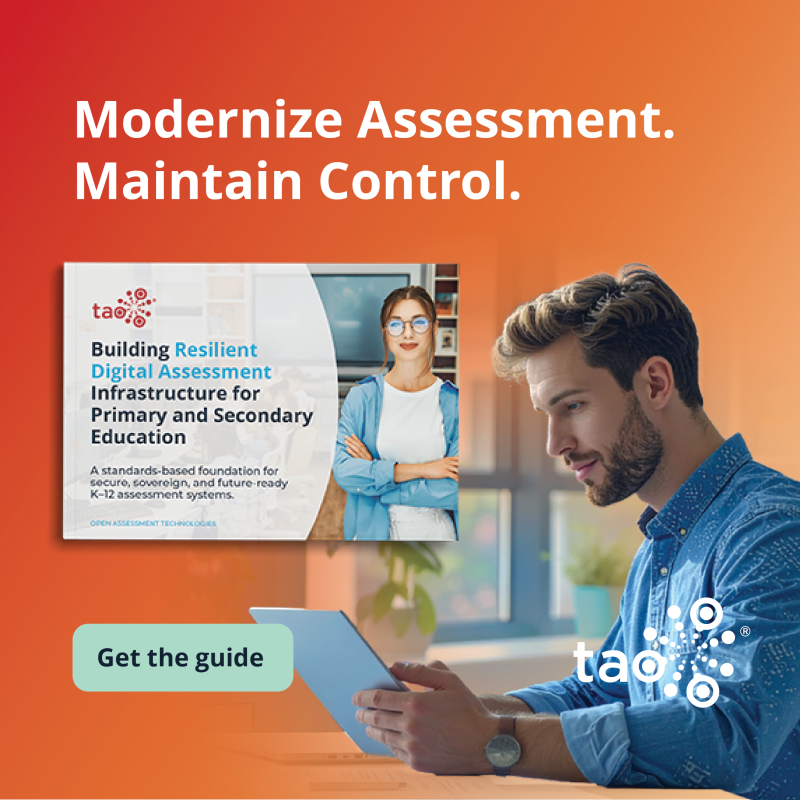
Digital transformation in assessment isn’t just a tech upgrade, it’s a strategic risk. Platform instability, vendor lock-in, and poor interoperability can derail entire testing cycles. Our guide helps you evaluate long-term risk, ensure flexibility, and make procurement-ready decisions before critical technology choices are locked in.
Digital transformation in large-scale assessment is not just a technology upgrade. It is a decision that can determine the success or failure of an entire testing cycle. Platform instability, vendor lock-in and weak interoperability models can quickly turn modernization efforts into operational risk.
Our strategic guide is designed to help you make informed, procurement-ready decisions before critical technology choices are locked in.
What You’ll Get:
Vendor-neutral overview to prevent lock-in
Standards-based interoperability model to protect asset portability
Operational readiness framework for high-stakes delivery
Data governance and reporting alignment for compliance assurance
Your next decision is a strategic one.
A single technology decision can determine whether your assessment program remains flexible, secure and scalable, or becomes locked into costly limitations.
Before committing to a platform or vendor, ensure you have the frameworks required to evaluate long-term risk, interoperability and operational readiness.
Inside the guide
"Digital assessment procurement is rarely a short-term decision. Assessment programs often operate for decades and the platform selected today will shape content portability, governance control and system flexibility well beyond the initial contract term.
Before committing to a solution, authorities must consider whether item banks can migrate without redevelopment, whether standards compliance is independently certified or simply declared, and whether scoring logic and audit data remain under institutional control. Integration models should be transparent and based on recognised specifications so that adjacent systems can evolve without forcing structural replacement of assessment assets.
This guide outlines the structural questions that should inform digital assessment procurement — beyond feature comparisons and short-term delivery considerations."
Download the full guide to review the complete decision framework.