Vretta
Why Early Screening Matters in Education: Insights From Math and Literacy Research
Ebrahim Talaee
Associate Professor and Assistant Dean of Assessment and Evaluation in College of Medicine -
7th May 2026
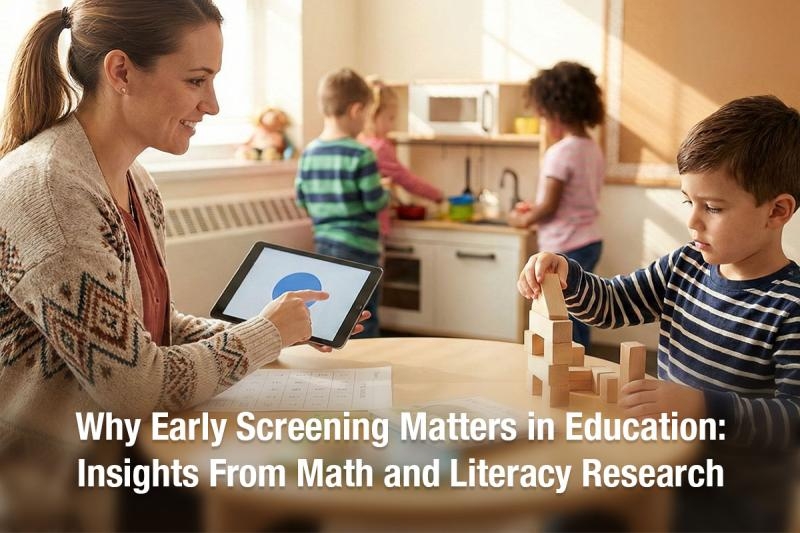
Early childhood education which spans from pre-school to low-mid elementary education lays the foundation for later academic achievement, socio-emotional development, and lifelong learning. During the early years of formal schooling (typically ages 4 to 8), children rapidly develop core skills in literacy and mathematics. These two areas profoundly influence children’s educational pathways. Early screening refers to brief, practical assessments administered universally or broadly to all young learners in a class with the aim of identifying those at risk for future academic difficulties before the gaps become entrenched.
Research consistently shows that early identification and intervention lead to better academic outcomes and help reduce long-term educational disparities[1]. Early screening matters not only because it reveals risk, but because it enables data-informed decision-making, targeted instruction, and efficient allocation of resources to support all students.
To better understand how early universal screening in literacy and numeracy serves as a proactive foundation for academic equity and lifelong success, read the full article here.